
Shopping cart

At Pride Heart Institute, we combine cutting-edge technology with compassionate care to deliver excellence in cardiac health, community wellness, and lifelong support.

Pacemaker & ICD Implantation

What Is Pacemaker and Cardiac Device Implantation?

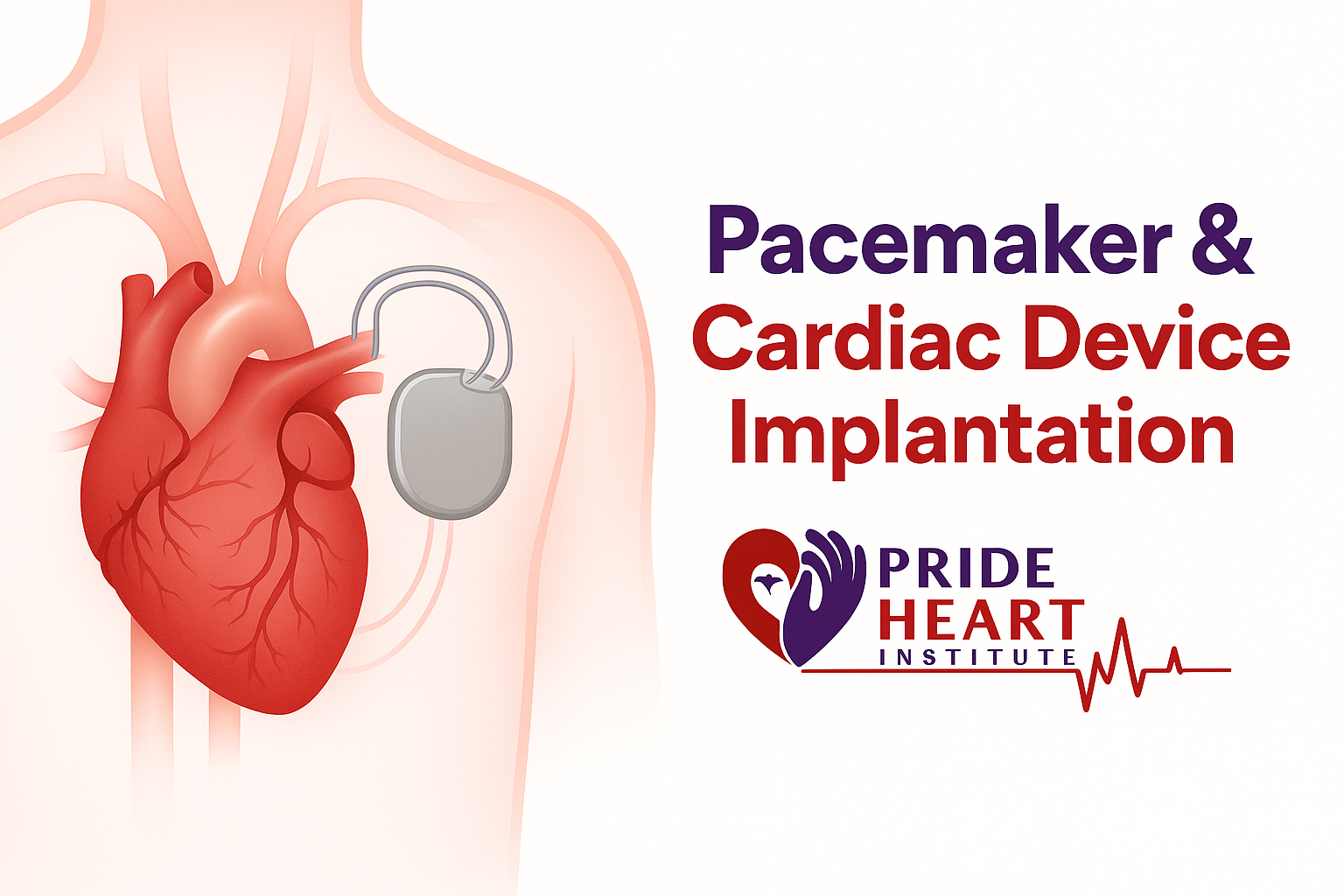
Pacemaker and cardiac device implantation places a small electronic generator under the skin, with wires leading to the heart, to correct slow or irregular rhythms and improve pumping efficiency.

Why Device Implantation Matters?

Pacemakers and advanced devices protect against dangerous rhythm disturbances, prevent sudden cardiac arrest, and improve quality of life for patients with bradycardia or heart-failure–related dyssynchrony.

Pacemaker & ICD Implantation
  • Restores stable heart rate and rhythm
  • Prevents fainting, dizziness, and fatigue
  • Reduces hospital admissions for arrhythmias
  • Improves exercise tolerance in heart-failure patients
  • Extends survival by preventing lethal pauses

Why Choose Pride Heart Institute?

Our electrophysiology team combines leading technology with vast implantation experience, ensuring optimal positioning, low complication rates, and personalised follow-up for every patient.

  • Board-certified electrophysiologists on site
  • Latest MRI-safe pacemakers, ICDs, CRT-P, CRT-D
  • 3-D mapping for precise lead placement
  • Conscious-sedation protocols for comfort
  • Same-day discharge in most uncomplicated cases

Our Device Implantation Process

A streamlined pathway delivers safe implantation, clear education, and rapid recovery from evaluation to first follow-up.

  • Pre-procedure rhythm analysis and device selection
  • Local anaesthetic and mild sedation for comfort
  • Fluoroscopy-guided lead insertion and testing
  • Generator placement beneath the collarbone
  • Post-implant programming and home-care briefing

Our Commitment to You

Pride Heart Institute’s rhythm team is dedicated to restoring your heartbeat’s reliability and your confidence in everyday activities. From the first consultation through remote monitoring and in-clinic checks, we provide attentive education, rapid troubleshooting, and lifelong device management so you can live actively, travel safely, and know help is always close.

You receive local anaesthetic and light sedation, so you may feel pressure but not pain. Most patients describe mild soreness at the pocket site for a few days, relieved by oral pain medicine.

A straightforward single-chamber pacemaker requires about one hour. Dual-chamber or CRT devices may take ninety minutes. You remain under continuous monitoring throughout and recover in a step-down area.

Avoid heavy lifting and raising the implant-side arm above shoulder level for one week. Light desk work is usually possible within two days; driving and exercise resume after your first follow-up.

Yes. Walk through metal detectors normally but avoid lingering near large magnetic scanners. Always carry your device identification card and show it to security personnel if additional screening is requested.

We schedule an in-clinic visit at two weeks, three months, and six months, then every six to twelve months. Remote monitoring checks your device automatically and alerts our team to any issues between visits.